
Varicose Veins
Varicose veins are enlarged veins that can be blue, red, or flesh-colored. They are often raised above the skin on legs and look like twisted, bulging cords because of a defect with the leaflet valves inside the vein.
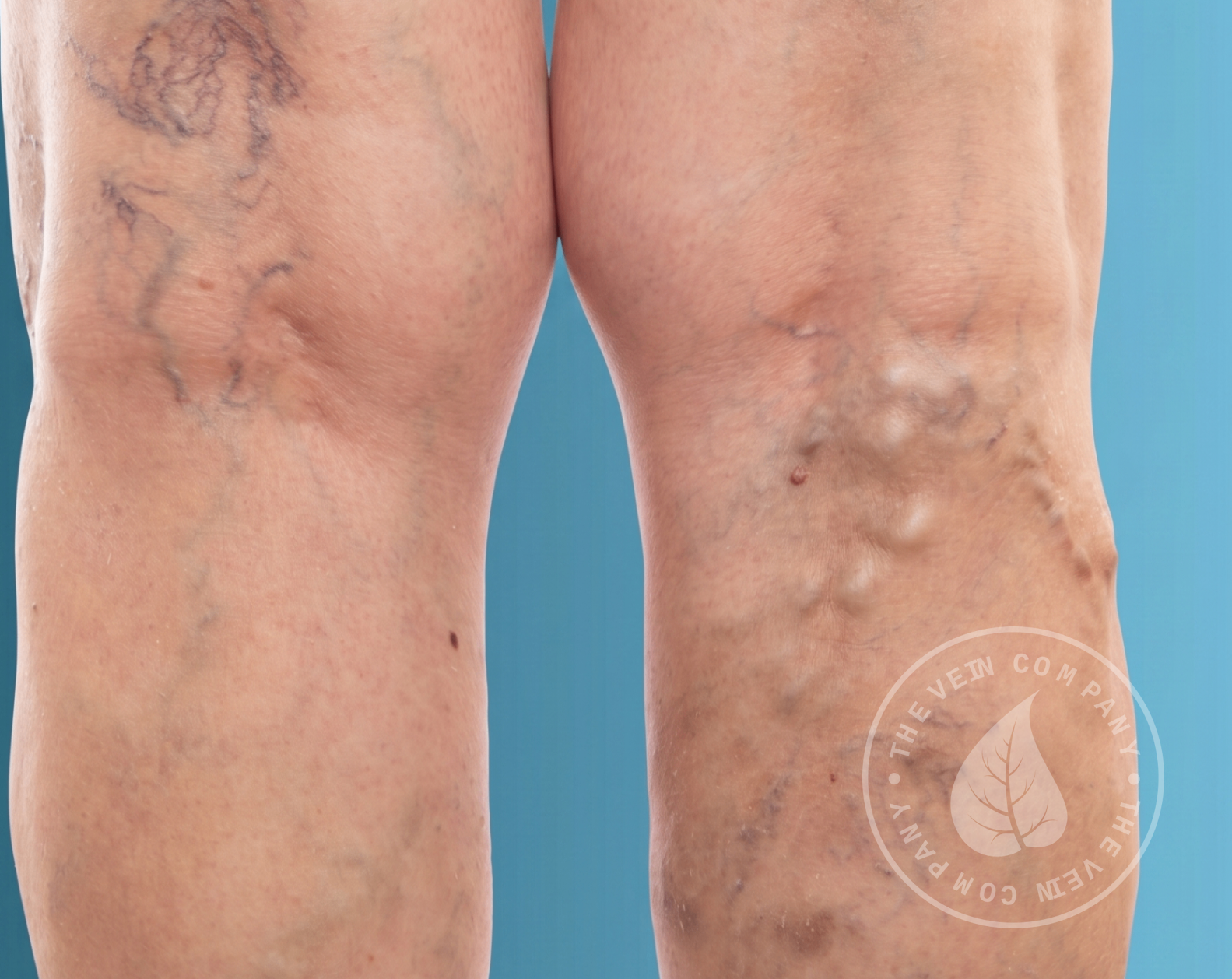
What varicose veins can look like
Example of bulging, twisted varicose veins on the lower leg. They can also be unseen as well.
Contains clinical photography | click to expand | © The Vein Company
Symptoms of Varicose Veins
Do you have one or more of the following?
- Veins that are dark purple or blue in color
- Veins that appear twisted and bulging; they are often like cords on your legs
- Heavy legs
- Itching and burning
- Lower leg swelling and pain (more pronounced at the end of the day)
- Night leg cramps
- Changes in skin color
- Leg ulcers
Varicose veins are many times thought of as only a cosmetic problem. However, serious medical issues can arise if left untreated. Often times, these symptoms are misdiagnosed or attributed to the natural process of aging. Varicose veins are present in 25% to 33% of female adults and 10% to 20% of male adults. In the US, chronic venous insufficiency (CVI) affects more than 30 million adults.
Causes of Varicose Veins
- Pregnancy
- Obesity
- Menopause
- Aging
- Leg injuries
- Prolonged standing or sitting
- Heredity
When Should You See A Doctor?
Elevating your legs, wearing compression stockings, and exercise can help ease the pain of varicose veins and prevent them from getting worse. But if you're concerned about the way they look or are experiencing regular discomfort, there are a number of treatment options that a doctor can perform.
Varicose Veins Treatments
Not every condition related to venous insufficiency requires treatment. You and your doctor should discuss your specific situation and the options that are best for you. Varicose vein removal treatments range from conservative, lifestyle-based approaches to more advanced outpatient treatment methods.
ClosureFAST™ Targeted Endovenous Therapy
The ClosureFast™ procedure is a minimally invasive segmental ablation treatment that utilizes radiofrequency (RF) energy to provide an even and uniform heat to contract the collagen in the vein walls, causing them to collapse and seal. Once the diseased vein is closed, blood will re-route itself to other healthy veins. The ClosureFast™ procedure allows for a quick, comfortable recovery and a return to everyday activities for the average patient while also improving the appearance of varicose veins.
VenaSeal™ Closure System
The VenaSeal™ closure system is the first and only treatment approved for use in the US that uses an advanced medical adhesive to safely and effectively close the diseased vein segment. Unlike other heat-based treatments, the VenaSeal™ closure system does not require multiple injections of a dilute local anesthetic (tumescent anesthesia), enabling patients a more comfortable treatment therapy and allowing them to rapidly return to normal activities following the procedure.
Non-thermal, Non-tumescent Therapy
These new treatment options do not require a heat source (non-thermal) to close the vein and, therefore, eliminate the need for the physician to use a tumescent (numbing agent). Because this therapy does not require numbing agents, the need for needle sticks is reduced, improving the patient experience.
Microambulatory Phlebectomy
Microambulatory Phlebectomy is an ancillary procedure typically reserved for removing remaining varicose veins that did not disappear after the treatment of refluxing superficial veins. It is a simple in-office procedure that involves minor surgical removal of any remaining bulging veins through small incisions. The incisions heal in about a week and typically do not require sutures.
Why it matters
Left untreated, varicose veins can progress to chronic venous insufficiency, leading to skin changes, ulcers, and blood clots. Early evaluation can prevent complications and relieve symptoms that many patients mistakenly attribute to aging.
Frequently asked questions
Varicose Veins treatment near you
We treat varicose veins at all of our locations across East Tennessee and Southwest Virginia.